
Blog · Pay & laws
Colorado Final Paycheck Law (2026): Due the Day You Fire Them
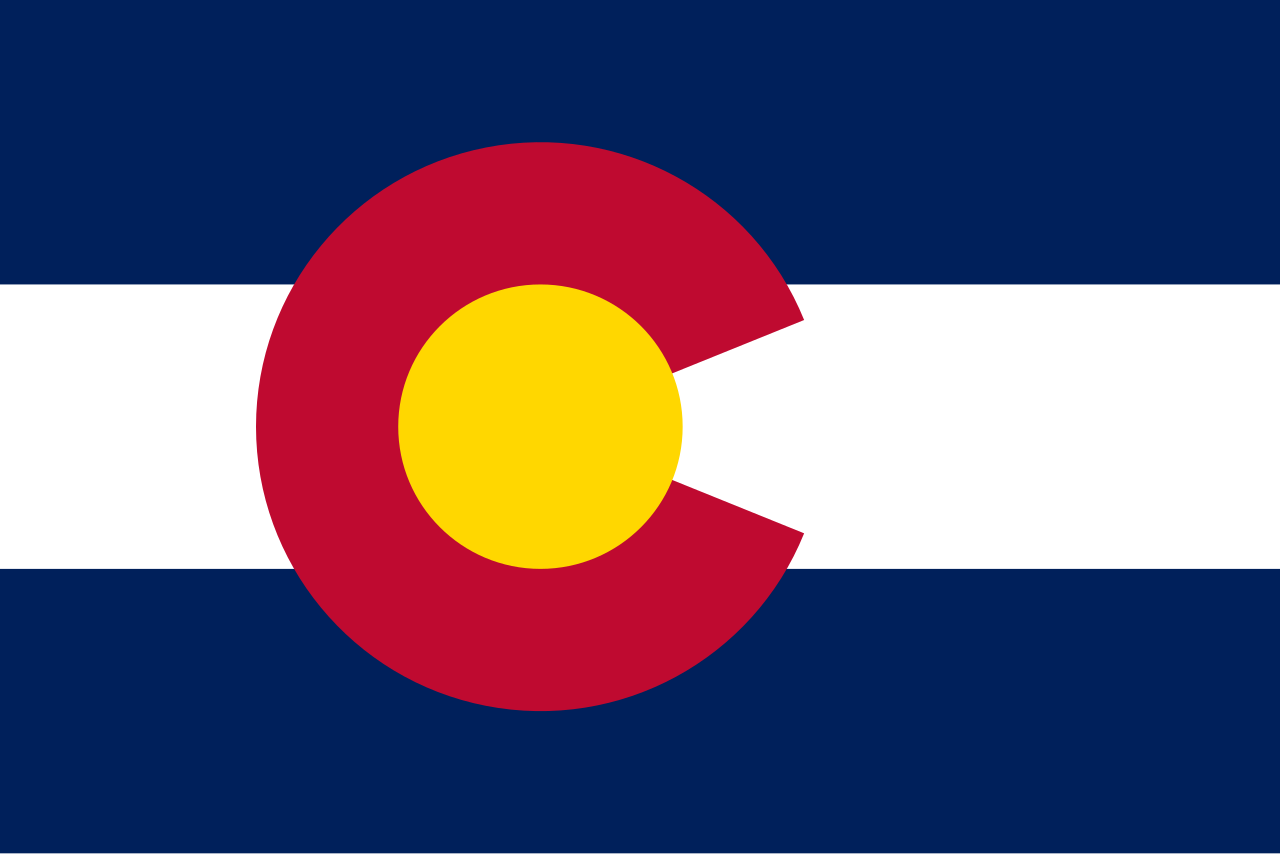
The Colorado state flag. Image: Wikimedia Commons, public domain.
Colorado starts the clock at the firing, not at your next payroll run. The check includes earned vacation whether your handbook likes it or not.
General information from Square Deal HR, not legal advice. Check your situation with an employment attorney.
On this page
- When is the final paycheck due if I fire someone?
- What if my payroll office is closed or off-site?
- What if the employee quits?
- Do I have to pay out unused vacation?
- What is the penalty for a late final paycheck?
- Can I take deductions from the last check?
- What notice do I owe at separation?
- Colorado final paycheck law FAQ
- Sources
When is the final paycheck due if I fire someone?
Immediately. When you end someone's employment, the wages they've earned and not yet been paid are due and payable right then. That covers a firing and a layoff.
What goes in the check, per the state's Division of Labor Standards and Statistics, the agency that enforces the wage law:
- Hourly, salary, and piece-rate pay through the last hour worked.
- Bonuses and commissions earned under your agreement with the employee.
- Vacation pay still unused when the job ends.
Severance is not wages under the law.
Small-business HR news, in plain words
New laws, pay rules and people problems that hit your business and your bottom line, explained in plain words. One short email when it matters.
It's free. Enter your email on the next page and you're on the list. We'll send it to your inbox. Unsubscribe any time.
What if my payroll office is closed or off-site?
The law gives you a short extension, and only for that reason.
| Your situation at the moment of firing | Final pay is due |
|---|---|
| The unit that cuts payroll checks is open | Immediately |
| That unit isn't scheduled to be working | No later than six hours after the start of its next regular workday |
| That unit is off-site | No later than 24 hours after the start of its next regular workday |
"Accounting unit" is the statute's term for whoever draws your payroll checks. That could be your bookkeeper, your office manager, or an outside payroll company.
When payroll is off-site, you choose where the check goes: the work site, your local office, or the employee's last-known mailing address.
Example: You fire someone at 4:30 p.m. Friday. Your payroll company is off-site and its next regular workday starts at 8 a.m. Monday. The check has to be delivered by 8 a.m. Tuesday.
The extension depends on payroll's schedule, not yours. A busy week or a cash crunch doesn't qualify.
What if the employee quits?
Final pay is due on the next regular payday. Same contents as a firing: all earned wages, plus earned vacation.
If an employee gives notice and you end the job early, the Division's guidance doesn't say how that's treated. My advice: play it safe and pay immediately, the way you would for a firing.
Do I have to pay out unused vacation?
Yes. Colorado doesn't make you offer vacation. If you do, all vacation pay that's been earned must be paid at separation. The statute says so, and the Colorado Supreme Court confirmed it in 2021 in Nieto v. Clark's Market.
What that means for your handbook:
- Forfeiture clauses don't work. A policy or agreement that wipes out earned vacation, such as for being fired or quitting without notice, isn't enforceable.
- It applies to any separation. Fired, laid off, or resigned.
- PTO counts as vacation. The Division treats any paid leave an employee can use for any reason, at their own discretion, as vacation pay, whatever you call it: PTO, annual leave, or floating holiday.
- "Unlimited PTO" usually isn't payable. But if you cap it in practice, the cap is the balance you owe.
- A real furlough isn't a separation. A bona fide furlough doesn't trigger the payout. It must be caused by a full or partial shutdown of your operations, and planned and genuinely expected to last no more than 30 days (or the length of a government emergency declaration that forced the shutdown). If either part isn't true, or stops being true, it's a separation and the vacation is owed.
Before any firing, pull the vacation balance and multiply it by the pay rate. That number goes in the same-day check.
What is the penalty for a late final paycheck?
The penalty comes after a written demand, and it's steep.
- The employee sends a written demand for the unpaid wages.
- You have 14 days to pay what's owed.
- If you don't, a penalty is added on top of the wages: - Two times the unpaid wages, with a $1,000 minimum. - If the failure to pay was willful, three times the unpaid wages, with a $3,000 minimum.
Example of the math: You owe $900 in final wages and don't pay within 14 days of a written demand. Two times the wages is $1,800, which is more than $1,000. You owe the $900 plus an $1,800 penalty.
A written demand can be informal, even a text message. A Notice of Complaint from the Division counts, and so does a demand made in court.
If you pay everything within 14 days of the Division's Notice of Complaint, the Division may waive the penalties, unless it's a second failure to pay within five years.
The practical point: if a demand letter shows up, pay the undisputed amount inside the 14 days. Arguing first and paying later is what turns a late check into triple the bill.
Can I take deductions from the last check?
Only the ones Colorado law allows, and the list is short.
The one built for a firing covers unreturned property or money. You can deduct its value from final pay only if all of these are true:
- You entrusted the employee with the money or property.
- The two of you agreed they would return it.
- They didn't return it as agreed.
- Within 10 days after the separation, you give written notice stating what wasn't returned, its replacement value, and, as far as you know, when it was handed over and when it should have come back.
You get those 10 days to figure out the value, an exception to the same-day rule. If the employee returns the item within 14 days of your notice, you have to pay back the deduction within 14 days. Skip the notice and the deduction isn't allowed.
When in doubt, don't deduct. Here is how I'd handle unreturned property:
- Pay final wages on time. Don't use the paycheck as leverage, and don't withhold legally owed wages.
- Document what's missing and send a written request with a reasonable return deadline.
- Keep a record of every attempt to get it back. If it still isn't returned, talk to an employment attorney about your civil options. Suspected theft may warrant a police report.
What notice do I owe at separation?
One state form. Colorado requires you to give a departing employee the "Notice of Potential Availability of Unemployment Insurance Benefits," Form 22-234, upon separation. You can hand over a paper copy or send it electronically. The requirement was added by Senate Bill 22-234 in 2022.
You fill in:
- The employee's name, address, and the last four digits of their Social Security number.
- Start date and last date worked.
- Year-to-date earnings and earnings for the last week worked.
- Your legal business name, address, and federal employer ID number.
- The reason for the separation: quit, layoff, discharge, or other.
Make sure the figures match your payroll records. Fill the form out before the meeting and hand it over with the check.
Related guides:
- Final Paycheck Laws by State compares Colorado with other states and covers health coverage after a firing, which has its own rules.
- When to Fire an Employee covers the decision itself.
Colorado final paycheck law FAQ
When is a final paycheck due in Colorado if you fire someone?
Immediately. If payroll isn't working at that moment, within six hours of the start of its next regular workday, or 24 hours if payroll is off-site.
When is the final paycheck due if an employee quits in Colorado?
On the next regular payday.
Does Colorado require PTO payout at termination?
Yes. Earned vacation pay must be paid at separation, and a policy can't forfeit it.
What is the Colorado final paycheck law penalty?
If wages stay unpaid 14 days after a written demand, the penalty is two times the unpaid wages, with a $1,000 minimum. For a willful failure, it's three times the wages, with a $3,000 minimum.
Can a Colorado employer deduct for unreturned property?
Only if you entrusted the property to the employee, they agreed to return it and didn't, and you give written notice within 10 days after the separation. Pay final wages on time — don't withhold legally owed wages. Document what's missing, send a written request with a reasonable return deadline, and keep a record of your attempts to recover it. If the property still isn't returned, consult an employment attorney about your civil recovery options. Suspected theft may warrant a police report.
Is severance pay part of final wages in Colorado?
No. The Division says severance is not wages under the wage law.
What form do I give an employee at separation in Colorado?
Form 22-234, the Notice of Potential Availability of Unemployment Insurance Benefits, on paper or electronically.
Want to learn more about your state's laws? See Final Paycheck Laws by State.
Sources
- C.R.S. § 8-4-109, Termination of employment; payments required; civil penalties. Colorado Wage Act, via the Colorado Division of Labor Standards and Statistics statutes page. https://cdle.colorado.gov/laborstatutes
- Colorado Division of Labor Standards and Statistics, INFO #3A, "Timing of Wage Payments & Required Record-Keeping" (last updated 01/09/2026). https://cdle.colorado.gov/sites/cdle/files/info_%233a_timing_of_wage_payments%2C_%26_required_record-keeping_1.9.2026.pdf
- Colorado Division of Labor Standards and Statistics, INFO #3E, "Payment of Earned Vacation upon Separation of Employment" (05/29/2024), citing C.R.S. §§ 8-4-101(14)(a)(III) and 8-4-109(1)(a). https://cdle.colorado.gov/sites/cdle/files/info_%233e_payment_of_earned_vacation_upon_separation_of_employment_05.29.24.pdf
- Colorado Division of Labor Standards and Statistics, INFO #3, "Summary: 'Wages' and 'Compensation' under Colorado Wage Law" (07/11/2023). https://cdle.colorado.gov/sites/cdle/files/info_%233_summary_%E2%80%9Cwages%E2%80%9D_and_%E2%80%9Ccompensation%E2%80%9D_under_colorado_wage_law_07.11.23.pdf
- Colorado Department of Labor and Employment, "Notice of Potential Availability of Unemployment Insurance Benefits," Form 22-234. https://cdle.colorado.gov/sites/cdle/files/documents/Employer-Separation-Form-22-234-fillable.pdf
- Colorado Division of Labor Standards and Statistics, INFO #2B, "Orders of Wages, Penalties, Fines, and Consequences for Non-Compliance" (08/11/2025). https://cdle.colorado.gov/sites/cdle/files/info_%232b_orders_of_wages%2C_penalties%2C_fines%2C_and_consequences_for_non-compliance_08.11.25.pdf
- Colorado Division of Labor Standards and Statistics, INFO #16, "Deductions From, and Credits Towards, Employee Pay" (07/15/2025). https://cdle.colorado.gov/sites/cdle/files/info_%2316_deductions_from%2C_and_credits_towards%2C_employee_pay_07.15.25.pdf
- Colorado General Assembly, SB22-234, "Unemployment Compensation" (signed 05/25/2022), adding C.R.S. § 8-74-101(4). https://leg.colorado.gov/bills/SB22-234
More for owners like you
Pay & laws
Final Paycheck Laws by State (2026)
When the last check is due, and what else you owe.

Firing
Before You Fire Someone: What to Think About First
Most bad firings go wrong months before the meeting.
Firing
When to Fire an Employee: What to Think About First
Most bad firings go wrong months before the meeting.
Small-business HR news, in plain words
New laws, pay rules and people problems that hit your business and your bottom line, explained in plain words. One short email when it matters.
It's free. Enter your email on the next page and you're on the list. We'll send it to your inbox. Unsubscribe any time.