
Blog · Pay & laws
Oregon Final Paycheck Law (2026): Due the Next Business Day
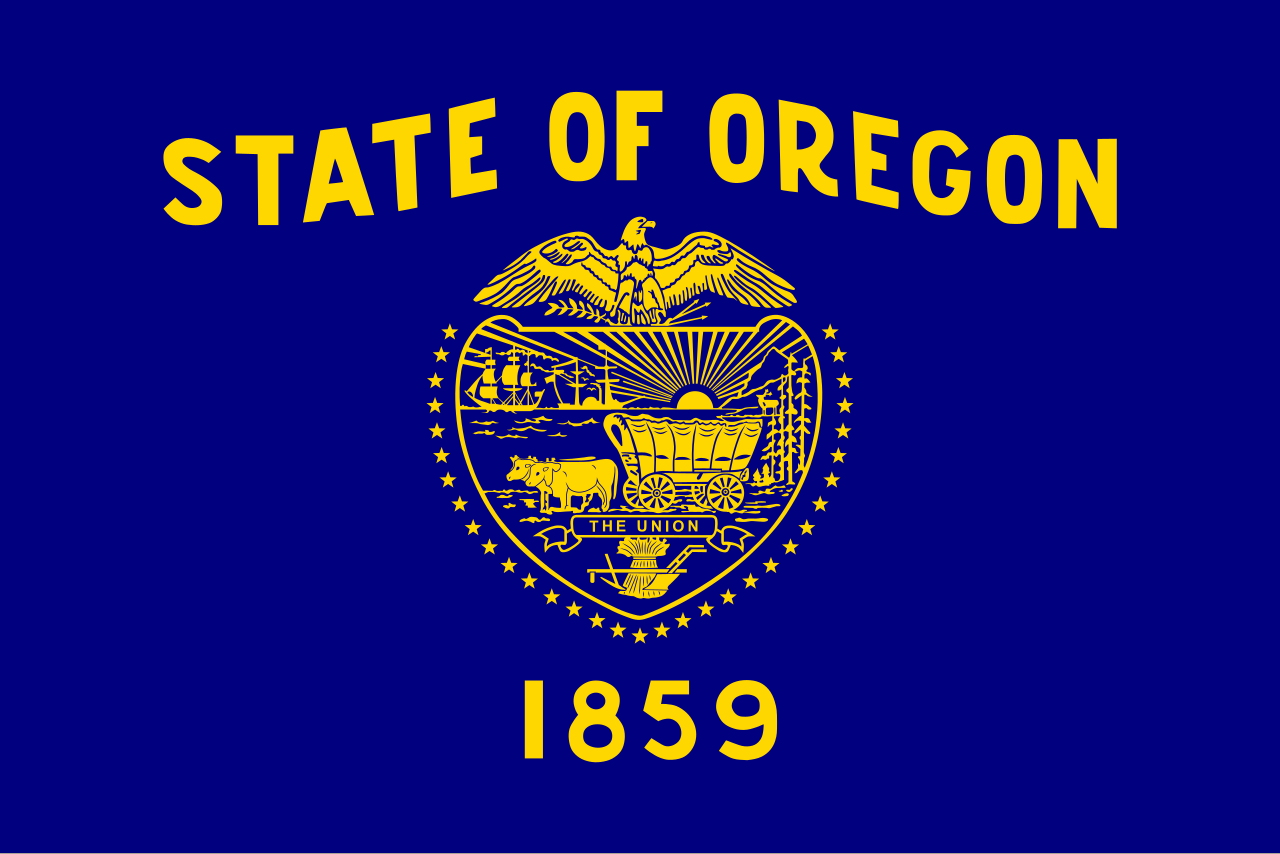
The Oregon state flag. Image: Wikimedia Commons, public domain.
Oregon gives you one business day. Fire someone at 4 p.m. Tuesday, and the check is due before you lock up Wednesday. Your payroll cycle doesn't matter.
General information from Square Deal HR, not legal advice. Check your situation with an employment attorney.
On this page
- When is the final paycheck due if I fire someone?
- What if the employee quits?
- What has to be in the last check?
- Do I have to pay out unused vacation or PTO?
- Can I hold the check or take deductions?
- How do I get the check to them on time?
- What does a late final paycheck cost?
- Does Oregon require a separation notice?
- Oregon final paycheck law FAQ
- Sources
When is the final paycheck due if I fire someone?
By the end of the first business day after the job ends. All wages earned and unpaid are due by then.
The same deadline applies in three cases:
- You fire them.
- You lay them off.
- You both agree to end it. A mutual parting gets the same one business day.
Weekends and holidays don't count. If the job ends on a Saturday, Sunday, or holiday, the wages are due by the end of the first business day after.
Example: You fire someone Friday, December 4, 2026. The next business day is Monday, December 7. The check is due by the end of Monday.
Two narrow exceptions:
- Union contracts. A collective bargaining agreement can set its own final-pay timing.
- State and county fair work. If that job ends on a weekend or holiday, the deadline is the end of the second business day.
Small-business HR news, in plain words
New laws, pay rules and people problems that hit your business and your bottom line, explained in plain words. One short email when it matters.
It's free. Enter your email on the next page and you're on the list. We'll send it to your inbox. Unsubscribe any time.
What if the employee quits?
It depends on how much notice you got.
| How they left | Final pay is due |
|---|---|
| Quit with at least 48 hours' notice | On the last day worked. If that day is a weekend or holiday, the next business day. |
| Quit with less than 48 hours' notice | Within five business days, or on the next regular payday if that comes sooner. |
The 48 hours don't include weekends or holidays.
If they give two weeks and you send them home early, you've ended the job, and the next-business-day clock starts. Oregon's Bureau of Labor and Industries (BOLI), the state's wage enforcement agency, says you don't owe pay for the unworked notice period unless that's your established practice.
If they walk off and you need their time records to figure the pay, the law has a path. Pay what you estimate is owed within five days. The balance is due within five days after they turn in the records.
Seasonal farmworkers have their own, faster rules.
What has to be in the last check?
Everything earned and unpaid through the last hour worked, not just the regular hours from the last pay period.
- Hourly and salary pay through the last day.
- Earned commissions. A commission can wait only if your agreement expressly says it isn't earned until the company gets paid. Everything else still goes out on time.
- Vacation, bonuses, or severance your policy or agreement promises.
If you disagree about the amount, pay the part you agree you owe, on time, with no strings attached. The employee keeps the right to chase the rest. Don't hold the whole check over a disputed piece.
Do I have to pay out unused vacation or PTO?
Only if you promised to. Oregon doesn't require employers to offer vacation pay, holiday pay, bonuses, or severance. If you have a policy or agreement that provides them, you have to honor it at termination.
So read your handbook:
- It says unused vacation is paid out: that money belongs in the final check.
- It says unused time is forfeited: follow that.
- It says nothing: you've left room for a dispute. Fix the wording before the next firing.
A 2026 bill, HB 4094, would have changed these rules. It did not pass.
Can I hold the check or take deductions?
No to holding it. BOLI is direct: employers may not withhold or delay a paycheck as discipline or to get company property back.
BOLI describes two main cases where deductions are allowed:
- The law requires it, such as taxes.
- The employee agreed in writing, and the deduction is for the employee's benefit.
The statute also lists a few narrower cases, such as deductions under a union contract. Each deduction has to show on the pay statement with its amount and purpose.
So an unreturned drill or uniform doesn't come out of the last check on your say-so. Here is how I'd handle unreturned property:
- Pay final wages on time. Don't use the paycheck as leverage, and don't withhold legally owed wages.
- Document what's missing and send a written request with a reasonable return deadline.
- Keep a record of every attempt to get it back. If it still isn't returned, talk to an employment attorney about your civil options. Suspected theft may warrant a police report.
How do I get the check to them on time?
Have it ready before you fire them. With a one-business-day deadline, waiting on your payroll company's regular run is how owners end up late.
Your options:
- Hand over a paper check at the meeting or the next business day.
- Mail it, if the employee asks you to and gives an address.
- Direct deposit, only if the departing employee agrees to it for the final pay.
One trap: a direct deposit that lands after the deadline is still late, and the employee's agreement to deposit doesn't waive the penalty. BOLI suggests asking your bank about an off-cycle deposit. If you can't confirm it will land in time, write a check.
What does a late final paycheck cost?
More than the check, in some cases.
- Penalty wages. If you willfully fail to pay on time, the employee's pay keeps running at their regular hourly rate, eight hours a day, until you pay or they file suit. It stops at 30 days.
- A cap, if you move fast. The penalty is limited to 100% of the unpaid wages unless you fail to pay within 12 days after the employee sends written notice of nonpayment. The cap doesn't apply if you violated the final-pay law in the year before, or if you let other employees go on the same day.
- A state civil penalty. BOLI can add $1,000 plus costs, interest, and attorney fees for a willful failure to pay final wages.
Example of the math: An employee earns $20 an hour. Eight hours a day is $160. Thirty days of penalty wages is $4,800 before any cap, on top of the wages you already owed.
"Willful" doesn't mean you meant harm. Notes published with the statute describe a case, Emery v. Portland Typewriter & Office Machine, where an employer held final pay because the worker kept company equipment. The failure was found willful.
The law does let an employer avoid the penalty by showing it was financially unable to pay when the wages came due. That's a defense to prove, not a plan.
Does Oregon require a separation notice?
No. Oregon has no state separation form. The Oregon Employment Department's list of employer responsibilities doesn't include a form to hand a departing worker.
What it does require is a posting. If you're a subject employer, the unemployment insurance notice (Form 11) has to be up where your employees can read it.
You still want paper:
- Give an itemized pay statement with the final check. Oregon requires one with every wage payment.
- Keep a dated record of when and how you delivered the check. If the deadline is ever questioned, that record is your proof.
Related guides:
- Final Paycheck Laws by State shows how Oregon compares with other states.
- When to Fire an Employee covers the decision itself.
Oregon final paycheck law FAQ
When is a final paycheck due in Oregon if you fire someone?
By the end of the next business day after the firing. Weekends and holidays don't count.
When is the final paycheck due if an employee quits in Oregon?
On the last day worked if they gave at least 48 hours' notice. Without that notice, within five business days, or on the next regular payday if that comes sooner.
Does Oregon require PTO payout at termination?
No. Unused vacation or PTO is owed only if your policy or agreement provides for it.
What is the penalty for a late final paycheck in Oregon?
For a willful failure, the employee's wages continue at eight hours a day for up to 30 days. The penalty is capped at 100% of the unpaid wages if you pay within 12 days of written notice, with exceptions.
Can an Oregon employer hold a final paycheck until equipment is returned?
No. BOLI says employers may not withhold or delay a paycheck to get employer-owned items back. Pay final wages on time — don't withhold legally owed wages. Document what's missing, send a written request with a reasonable return deadline, and keep a record of your attempts to recover it. If the property still isn't returned, consult an employment attorney about your civil recovery options. Suspected theft may warrant a police report.
Can I pay a final paycheck by direct deposit in Oregon?
Yes, if the departing employee agrees. The money still has to arrive by the deadline.
Want to learn more about your state's laws? See Final Paycheck Laws by State.
Sources
- ORS 652.140, Payment of wages on termination of employment. Oregon Revised Statutes, Chapter 652, 2025 Edition. https://www.oregonlegislature.gov/bills_laws/ors/ors652.html
- ORS 652.150, Penalty wage for failure to pay wages on termination of employment. Same chapter. https://www.oregonlegislature.gov/bills_laws/ors/ors652.html
- ORS 652.160, Payment in case of dispute over wages. Same chapter. https://www.oregonlegislature.gov/bills_laws/ors/ors652.html
- Oregon Bureau of Labor and Industries, "Paychecks" (citing ORS 652.110, 652.120, 652.140, 652.150, 652.160, 652.610, and OAR 839-001-0420). https://www.oregon.gov/boli/workers/pages/paychecks.aspx
- HB 4094, 2026 Regular Session, Oregon Legislative Information System. https://olis.oregonlegislature.gov/liz/2026R1/Measures/Overview/HB4094
- Oregon Legislative Policy and Research Office, "2026 Legislative Summary Report: Labor and Employment." https://www.oregonlegislature.gov/lpro/Publications/Oregon-Legislative-Summary-Report-Labor-and-Employment-2026.pdf
- Oregon Legislature, Annotations to ORS Chapter 652 (Emery v. Portland Typewriter & Office Machine, 86 Or App 635 (1987)). https://www.oregonlegislature.gov/bills_laws/ors/ano652.html
- Oregon Employment Department, "Employer Responsibilities." https://www.oregon.gov/employ/Businesses/Pages/Employer-Responsibilities.aspx
More for owners like you
Pay & laws
Final Paycheck Laws by State (2026)
When the last check is due, and what else you owe.
Firing
Before You Fire Someone: What to Think About First
Most bad firings go wrong months before the meeting.
Firing
When to Fire an Employee: What to Think About First
Most bad firings go wrong months before the meeting.
Small-business HR news, in plain words
New laws, pay rules and people problems that hit your business and your bottom line, explained in plain words. One short email when it matters.
It's free. Enter your email on the next page and you're on the list. We'll send it to your inbox. Unsubscribe any time.